All About Soundproof Flooring Solutions
Is your home or business echoing with thumps, footsteps, and muffled voices from above? You’re not alone. Whether it’s a busy office, a bustling family home, or a ground-floor apartment, unwanted noise travels easily between floors. And it can chip away at your peace—one creak at a time.
At JC Carpet & Flooring, we know how disruptive these sounds can be. Our team helps you understand—and fix—floor noise so your space feels private, calm, and comfortable.
Soundproofing Basics: How Noise Travels Through Floors 🛑
Sound behaves like water. It finds cracks, gaps, and even the tiniest holes to slip through. In flooring, two main types of noise make life difficult:
- Impact noise: Think footsteps, dropped items, or moving chairs. These travel as vibrations through the floor structure.
- Airborne noise: Voices, music, or TV sounds that seep through ceilings and floorboards.
Most floors—especially in older or multi-story buildings—weren’t built for modern soundproofing. That’s why you’ll often hear every step or conversation as if there were no barriers at all.
Why Soundproof Your Floors?
Noise isn’t just an annoyance. Over time, it can cause sleep loss, stress, and frustration. For businesses, it disrupts productivity. For families, it means less privacy and comfort.
Studies from the National Institute for Occupational Safety and Health show that constant noise impacts well-being and can even slow children’s learning at home. And according to the International Building Code (IBC), residential and commercial spaces must meet certain sound transmission requirements for safety and comfort.
The Science of Silence: What Works
Let’s break down what really works to block sound:
- Mass: Heavy, dense materials block more sound.
- Dampening: Soft layers absorb vibrations.
- Separation: Gaps or floating floors keep vibrations from traveling through solid connections.
No single product can do it all. The best soundproof flooring combines several layers and materials.
Material Options for Soundproof Flooring
Carpet: The Classic Sound Sponge
Carpet is still one of the best ways to hush a room. Its fibers and padding soak up both impact and airborne noise. Wall-to-wall carpet in bedrooms or offices makes a night-and-day difference.
Cork Flooring: Nature’s Quiet Genius
Cork is unique. It’s springy, eco-friendly, and filled with tiny air pockets that trap sound. Cork flooring and underlayment are perfect for apartments, offices, or playrooms—anywhere you want a softer, quieter feel.
Luxury Vinyl Plank (LVP) & LVT: Beauty with Backup
LVP and LVT look like hardwood but offer more flexibility. Many come with attached sound-absorbing underlayments. When paired with an extra acoustic layer beneath, these floors block even more noise—without sacrificing style.
Specialized Underlayments
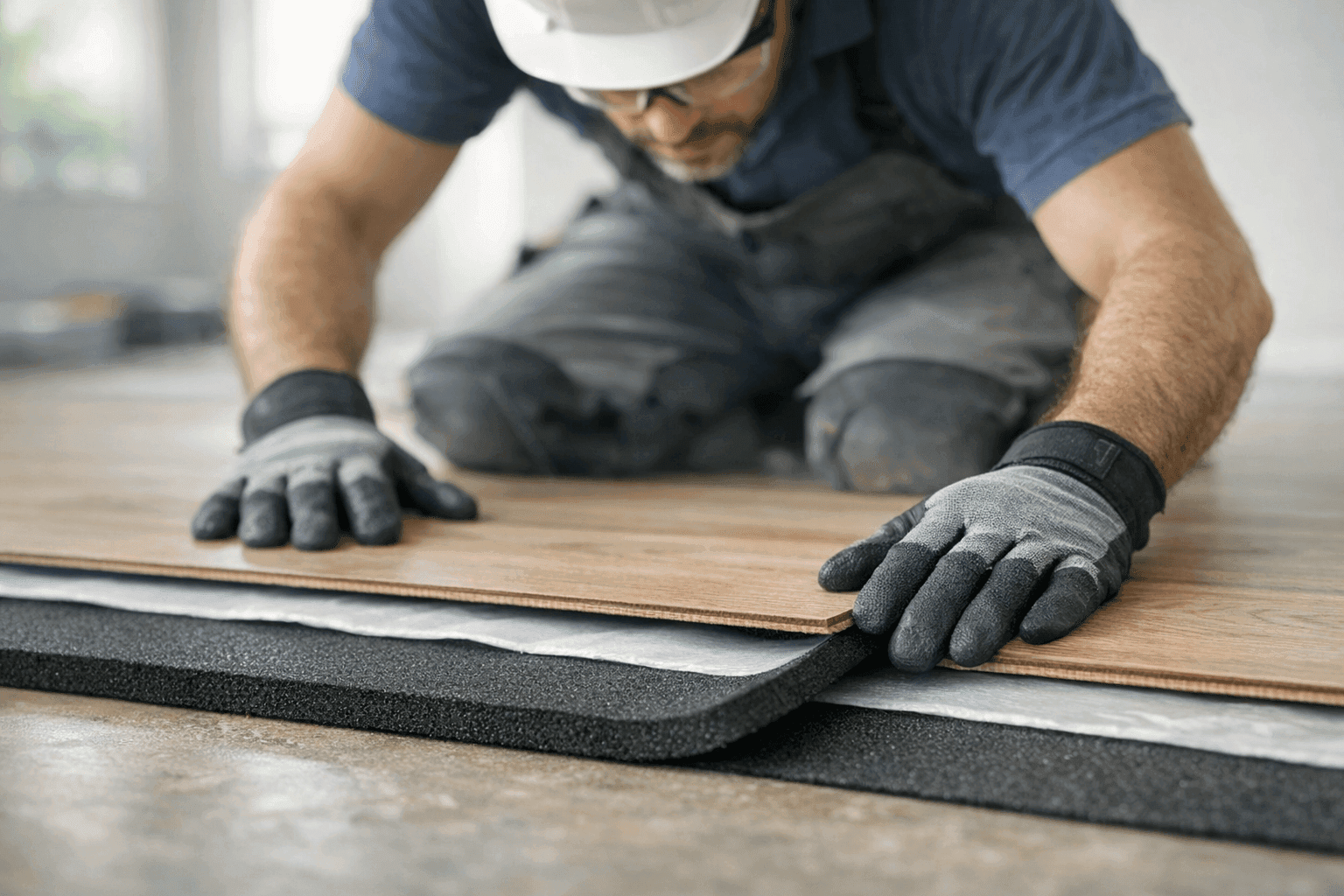
Underlayments are the secret weapon. Materials like recycled rubber, dense foam, or engineered felt create a buffer zone under hard floors. They cut down impact noise and help meet strict building codes for multi-family residences.
Epoxy & Concrete: Hard Isn’t Hopeless
On their own, concrete and epoxy are noisy. But add a thick underlayment or area rug, and you’ll notice a huge improvement. These floors are common in garages, basements, and commercial spaces, where durability is key.
When to Upgrade: Signs You Need Better Soundproofing
- You hear every footstep from the floor above.
- Conversations in the next room sound loud and clear.
- You notice echoes or a “hollow” feeling in large, open rooms.
- Tenants or neighbors complain about noise.
If you experience any of these, it’s time to consider Soundproofing Solutions. Sometimes, a quick flooring consultation is all it takes to pinpoint the problem.
Quick Safety Checklist for Soundproof Flooring
- Check for loose boards or gaps between planks.
- Inspect subfloors for cracks or damage.
- Make sure underlayments are installed according to manufacturer specs.
- Confirm your setup meets local building code requirements (like IIC and STC ratings).
For code compliance, refer to the latest International Building Code or your local regulations.
DIY vs. Call a Pro: What’s the Best Approach?
Some soundproofing projects seem simple—roll out a new rug, or install a basic underlayment. But for larger spaces, high-traffic areas, or when the stakes are high (like commercial settings), professional installation is worth it.
Pros know how to:
- Select the right materials for your space and needs.
- Prep subfloors to prevent future issues.
- Layer underlayments for maximum sound dampening.
- Ensure everything’s up to code and safe.
If you want a truly quiet result, call in flooring specialists.
What To Expect: The Pro Arrival
When our team arrives, we’ll:
- Assess your current floors and subfloors.
- Measure sound transmission (using decibel meters if needed).
- Recommend the best mix of materials and installation methods.
- Provide a clear timeline and cost estimate.
Transparency helps you plan your upgrade with zero surprises.
Installation Tips for Quiet Floors
- Always start with a level, dry, and clean subfloor.
- Use the thickest underlayment your floor can handle.
- Overlap seams and seal edges for total coverage.
- Leave expansion gaps as recommended (don’t trap moisture).
- For multi-story buildings, ask about double-layer underlayments or floating floors.
These steps help soundproofing materials perform as advertised—and keep your floors safe and stable.
Measuring Results: How Quiet is “Quiet Enough”? 📏
After installation, you’ll feel the difference right away. For a more scientific check, measure before-and-after noise levels with a decibel meter. Most modern soundproof flooring systems can reduce impact noise by 15-30 decibels—a dramatic improvement.
Ask about IIC (Impact Insulation Class) and STC (Sound Transmission Class) ratings. Higher numbers mean better soundproofing. For most homes and offices, an IIC of 50+ is considered excellent.
Maintenance & Prevention: Keep It Quiet
- Vacuum carpets and cork floors regularly to keep fibers fluffed and effective.
- Check underlayments every few years for signs of wear or moisture.
- If you have LVP or LVT, use soft pads under furniture to minimize direct impact.
Regular checks keep your investment working for years.
Common Mistakes to Avoid
- Skipping the underlayment to save money—big mistake.
- Using the wrong type of underlayment (not all foam is created equal).
- Poor subfloor prep, leading to squeaks and gaps.
- Forgetting code requirements or building guidelines.
A little planning goes a long way.
Seasonal Considerations: Noise Changes Year-Round
Temperature and humidity affect how sound travels. Hard floors like concrete can echo more in winter when the air is dry. In summer, wood and cork may expand or contract, causing gaps that let noise in. Schedule inspections with the change of seasons for best results.
Costs & Timeline: What To Expect
Soundproof flooring is an investment. Material costs range widely—carpet and cork are affordable, while premium underlayments and engineered LVP cost more upfront. Installation usually takes one to three days for a standard room, with minimal disruption to your daily life.
If you need help budgeting, ask us for a Flooring Consultation. We’ll walk you through options that fit your needs and timeline.
When It’s an Emergency
If you notice sudden spikes in noise—or if you’re dealing with water leaks, damaged subfloors, or structural shifts—don’t wait. These issues can compromise both soundproofing and safety. Reach out right away for professional help.
Frequently Asked Questions
Does underlayment really make a difference?
Yes, the right underlayment can cut noise by more than half, especially for hard-surface floors.
Is carpet always the quietest?
Carpet is excellent, but modern LVP with a high-quality underlayment can be almost as quiet—and easier to maintain.
Can I soundproof just one room?
Absolutely. Bedrooms, home offices, and conference rooms are top choices for targeted upgrades.
The JC Carpet & Flooring Difference
Our team brings years of experience to every project. We focus on evidence-based solutions, safety, and real comfort—no quick fixes or shortcuts. Whether you’re looking for Residential Flooring near you or a comprehensive noise reduction strategy, we’re ready to help.
If you’re in Charleston, you’ll find our flooring services are trusted by families and businesses who value peace and quiet. Learn more about us on our flooring page.
Call JC Carpet & Flooring now — or reach us anytime at 855-557-1115 .