The Floor Sanding Process: What Homeowners Need to Know
Every scratch and scuff tells a story. Over years, your floors quietly bear the weight of daily life—shoes, paws, furniture, spills, and memories. But what happens when the shine fades and the surface feels rough beneath your feet?
That’s when floor sanding steps in. At JC Carpet & Flooring, we’ve seen how a well-sanded floor brings a room back to life—transforming tired boards into a smooth, inviting surface you’ll want to walk barefoot on. Here’s what every homeowner should know before, during, and after the sanding process.
Why Sanding Floors Is Important
Think of sanding like giving your floors a fresh start. Over time, even the toughest hardwood loses its luster. Scratches, dents, and wear marks build up like fingerprints on a window. Sanding removes that worn layer, revealing the untouched wood beneath.
- Restores smoothness and beauty
- Prepares the surface for new finishes or stains
- Erases years of wear and tear
- Increases home value and flooring longevity
For both homes and businesses, regular floor sanding helps floors withstand the test of time. Don’t let minor damage become a major headache.
Step-by-Step Sanding Process 🪚
1. Preparation: The Groundwork for Success
Preparation is half the battle. Before any sanding begins, we:
- Remove furniture, rugs, and breakables from the area
- Check for loose boards, protruding nails, or old carpet tacks
- Clean the floor thoroughly to remove dust and debris
A clean, empty room is more than just convenient—it’s essential for a flawless result.
2. Floor Inspection and Repairs
Every floor is unique. Some show off their age with pride; others hide surprises under the surface. We always inspect for:
- Warped or damaged boards needing replacement
- Squeaks or loose planks
- Signs of moisture or mold
If we find trouble spots, repairs come first. This ensures the sanding process doesn’t worsen existing problems. According to the National Wood Flooring Association (NWFA), proper subfloor and board inspection is key to a safe and lasting finish.
3. Sanding: The Main Event
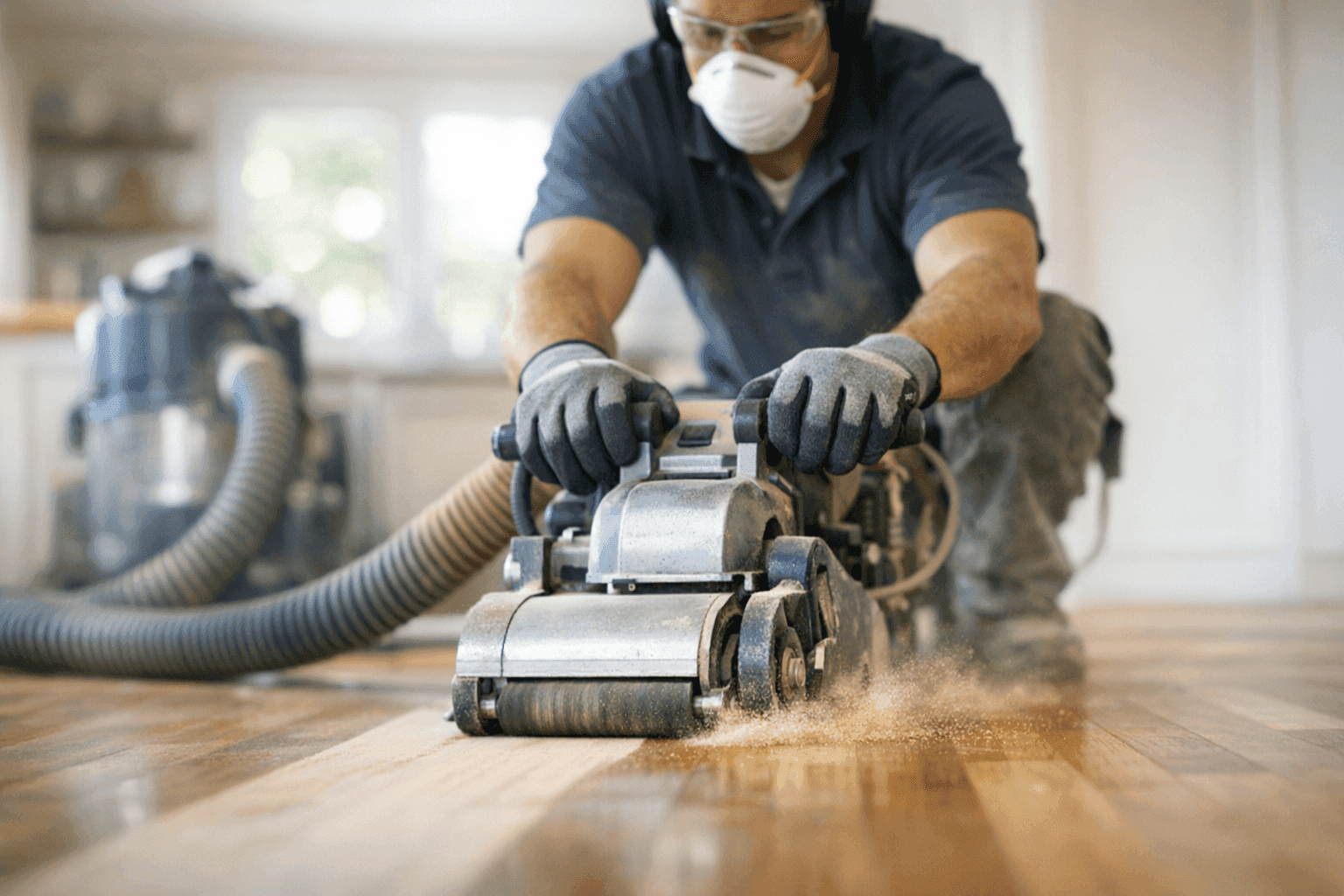
Now the magic happens. Using professional drum and orbital sanders, we gently remove the old finish and the top layer of wood. The process usually takes three passes:
- Coarse Grit: Removes deep scratches and old finishes
- Medium Grit: Smooths away roughness from the first pass
- Fine Grit: Leaves a silky, even surface ready for stain or sealant
Corners and edges are tackled with hand tools for consistency.
4. Dust Management: Keeping Your Home Clean
Sanding creates dust. A lot of it. But modern sanding equipment—like those we use at JC Carpet & Flooring—connects to powerful vacuums that capture most dust at the source. This protects your air quality and keeps cleanup to a minimum.
- Seal off adjacent rooms with plastic sheeting
- Change HVAC filters during and after sanding
- Plan for a deep clean once sanding is finished
According to the Environmental Protection Agency (EPA), good dust control protects indoor air and your family’s lungs.
5. Staining and Finishing
Once the wood is silky smooth and dust-free, it’s time to add character. Stain brings out the wood’s natural beauty or gives it a whole new mood. After staining, we seal the floor with a tough, long-lasting finish—typically water- or oil-based polyurethane.
- Wait for each coat to dry fully before the next
- Lightly sand between coats for a glassy finish
- Floor is ready for light use after 24 hours, full cure in 7 days
What to Expect During Sanding
Curious how long it takes? For an average living room, sanding and finishing usually take 2–3 days. Larger spaces or extensive repairs add time. Your home will be quieter and cleaner than you’d expect, thanks to modern equipment.
You’ll notice:
- Some noise and vibration
- A faint woodsy scent
- Professionals focused on every detail
Foot traffic should be avoided until the final finish has cured. Plan ahead for pets and kids.
Dust Control and Safety 🌬️
Safety always comes first. Sanding generates fine particles that float just about everywhere, so here’s how we protect your home and our crew:
- Use of dust collection systems on all sanders
- Protective gear (respirators, goggles)
- Proper ventilation—open windows if weather allows
- Sealing off work zones to contain dust
For homes with allergies or respiratory concerns, let us know in advance. We can take extra precautions for sensitive households.
Quick Safety Checklist
- Remove all items from the floor—including nails, staples, and tacks
- Store food and valuables away from the workspace
- Keep children and pets clear of the area during work
- Ensure smoke detectors are dust-free and operational
These steps help prevent accidents and ensure a smoother job.
DIY vs. Call a Pro
Sanding looks easy on TV. In reality, it’s more like learning to ride a bike—with no training wheels. Rental sanders are heavy, and one wrong move leaves permanent marks. Professional teams, like JC Carpet & Flooring, have years of practice, steady hands, and top-grade tools.
DIY can save money in the short run, but mistakes are costly. If you want flawless, long-lasting results, consider calling in the pros.
What Pros Do on Arrival
From the first knock on your door, here’s what happens:
- Assess the room and floor type
- Confirm project details, stain preferences, and finish options
- Set up dust barriers and explain the timeline
- Begin the careful step-by-step process outlined above
Communication is key. We’ll keep you updated at every stage.
Prevention & Maintenance
Once your floors are sanded and shining, keep them looking great:
- Use rugs in high-traffic zones
- Clean up spills fast to prevent stains
- Avoid harsh chemicals; use a damp mop with mild cleaner
- Place felt pads under furniture legs
Routine care helps delay the need for another sanding. For deep cleaning, floor refinishing might be the next step instead.
Costs & Time Factors
The cost of sanding depends on:
- Floor size and type (hardwood, engineered, etc.)
- The number of repairs needed
- Choice of finish or stain
Time varies too. A single room is often finished in a couple of days. Whole homes or commercial spaces take longer but are worth the wait. For a custom quote, reach out to our team.
When It’s an Emergency
Serious water damage, deep gouges, pet stains, or buckling boards? Don’t wait. These are signs your floor needs attention right away. Quick action can often save the floor—and your budget.
FAQ: Floor Sanding for Homeowners
Q: How often should floors be sanded?
A: Traditional hardwood can be sanded every 7–10 years, depending on wear.
Q: Is sanding safe for all floors?
A: Solid hardwood is best. Engineered floors can sometimes be sanded, but laminate or vinyl should never be.
Q: Will there be a smell?
A: Some finishes have an odor while drying. Proper ventilation helps clear the air quickly.
Q: Can you match my existing stain or color?
A: Yes. We test stains on a small area first to ensure a seamless look.
For more on our hardwood flooring options, explore our service pages.
Seasonal Considerations
Humidity and temperature affect both the wood and the finish. Winter air can dry floors out; summer humidity makes them swell. The best time for sanding is when humidity is moderate—usually spring or fall. If you’re unsure, ask our team for seasonal advice.
Common Mistakes to Avoid
- Skipping preparation or repairs
- Using the wrong grit sequence
- Over-sanding or uneven sanding
- Rushing the finish coats
These can leave you with uneven color, scratches, or even damage that’s tough to fix. Trust experience over speed.
Signs of Trouble
Watch for these warning signs:
- Deep scratches or gouges reappear after cleaning
- Floors feel rough even after mopping
- Finish is flaking or peeling
- Boards squeak or shift underfoot
If you notice these, it’s time for a professional inspection.
Timeline & Disruption
Plan for some disruption—but not chaos. One room can often be sanded and finished without closing off the whole house. We’ll help schedule work to fit your life, minimizing downtime and hassle.
Materials & Equipment
We use:
- Industrial sanders (drum and orbital)
- Dust containment vacuums
- Eco-friendly stains and finishes when possible
- Hand tools for detail work
All equipment is maintained to the highest standards for safety and performance.
A refreshed floor is more than just a surface—it’s the stage for your family’s next chapter. Whether you’re renovating a single room or an entire business, the right team makes all the difference.
Call JC Carpet & Flooring now — or reach us anytime at 855-557-1115 .