How to Prevent Mold and Mildew Under Flooring
Have you ever peeled back a corner of your flooring and found a musty, dark patch staring back at you? It’s a homeowner’s nightmare, and for businesses, it can mean costly repairs and health risks for everyone inside. At JC Carpet & Flooring, we’ve seen it all—from harmless-looking stains to hidden colonies of mold threatening the integrity of your floors and the air you breathe.
Mold and mildew are more than just ugly. They’re silent invaders that can damage your property and threaten your health. But with the right knowledge and a few smart choices, you can keep your floors safe and dry. Here’s how.
Mold Risks: Why Worry About What’s Under Your Feet? 🦠
Mold isn’t picky. It’ll take root wherever moisture lingers—especially under your flooring, where darkness and warmth create the perfect storm. According to the Centers for Disease Control and Prevention (CDC), mold exposure can cause allergic reactions, asthma, and even long-term lung problems.
Here’s what makes your floors vulnerable:
- Humidity: High indoor humidity (above 60%) feeds mold like water to a thirsty plant.
- Leaks: Dripping pipes, roof leaks, or even small spills seep under floors, often unnoticed.
- Poor Drainage: Basements and ground-level rooms are especially at risk if water isn’t directed away from your foundation.
Ignoring these risks is like leaving your front door open during a rainstorm. Sooner or later, trouble comes in.
Which Floors Are Most—and Least—Vulnerable?
Not all floors are created equal when it comes to mold. Some materials fight back. Others invite trouble.
Most Vulnerable:
- Carpet: Once mold gets into the pad, it’s nearly impossible to remove without replacing everything.
- Laminate and Engineered Wood: These can trap water between layers and warp if exposed to moisture.
- Traditional Hardwood: Looks beautiful but can cup, swell, and hide mold underneath if not properly sealed.
Least Vulnerable:
- Epoxy Flooring: Seamless and non-porous, making it tough for moisture to slip through.
- Luxury Vinyl Plank (LVP) and Tile (LVT): Water-resistant if seams are tight and installation is professional.
- Tile with Sealed Grout: Properly sealed tile resists water, but unsealed grout is a weak spot.
- Concrete (when properly sealed): Can resist mold, but cracks and surface imperfections are trouble spots.
Choosing the right material for your space—and your climate—can be the first line of defense.
The Key Ingredient: Moisture Barriers
Think of a moisture barrier like a raincoat for your home. It sits between your subfloor and your finished flooring, blocking water from sneaking up from below.
Why Install a Moisture Barrier?
- Stops ground moisture from creeping into your floors.
- Essential for basements, ground floors, and any area prone to dampness.
- Required by many building codes for new flooring installations (see International Residential Code Section R317).
Types of Moisture Barriers:
- Plastic Sheeting: Common under laminate, vinyl, and engineered wood.
- Liquid Membranes: Rolled or brushed on—great for concrete subfloors.
- Epoxy Coatings: Doubles as a moisture barrier and a finished floor.
If you’re unsure about the right barrier for your flooring, a professional Moisture Barrier Installation service makes all the difference.
Ventilation Tips: Keep the Air Moving
Stale, humid air is a mold magnet. Good ventilation keeps moisture at bay and helps your floors—and your family—breathe easy.
Simple Steps:
- Use Exhaust Fans: Especially in bathrooms, kitchens, and laundry areas.
- Open Windows: Even a few minutes a day can lower humidity indoors.
- Dehumidifiers: Essential for basements and humid climates.
- HVAC Maintenance: Clean filters and regular servicing mean better airflow and fewer moisture problems.
Quick Safety Checklist: Spotting Trouble Early
Don’t wait for musty smells. Catch mold before it spreads with this quick check:
- Unusual odors, especially after rain or humidity spikes.
- Warped, buckling, or discolored flooring.
- Persistent allergies or asthma symptoms indoors.
- Peeling paint or damp walls near the floor.
Consider regular Floor Inspections to catch problems before they take root.
DIY or Call a Pro? Knowing When to Act
Some jobs are safe for homeowners—like running a dehumidifier or resealing tile grout. But if you find mold under your floors, it’s time to call in pros like JC Carpet & Flooring.
Why? Because mold can spread quickly, and improper removal risks making things worse. Professional teams have the right tools and follow EPA and OSHA guidelines for safe remediation.
What Pros Do On Arrival
When you call a flooring contractor, here’s what to expect:
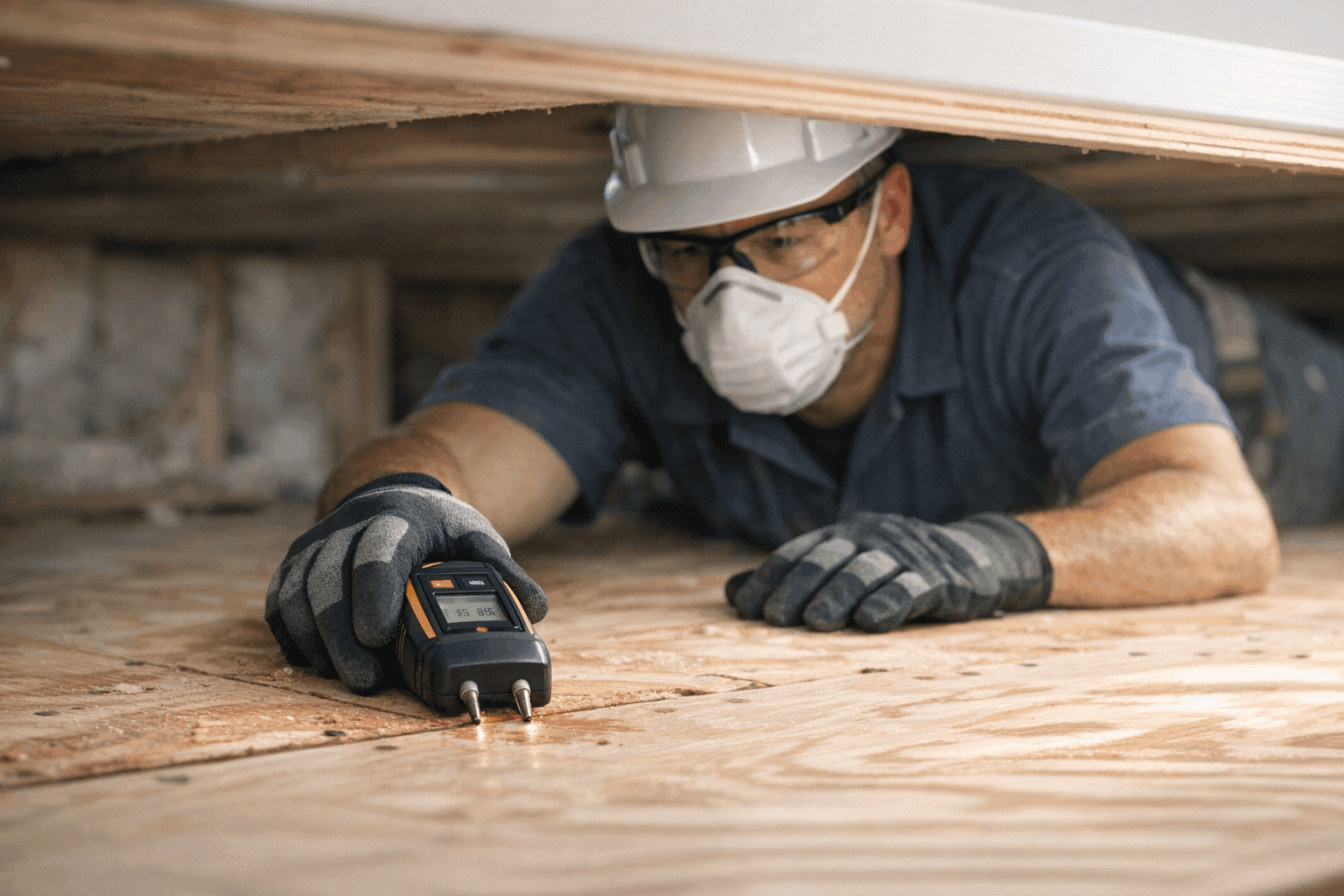
- Thorough inspection—using moisture meters and thermal imaging.
- Pinpointing the source—leak, drainage, condensation, or another culprit.
- Safe removal—cutting out contaminated materials and cleaning the area.
- Installing or upgrading moisture barriers.
- Recommendations for repairs or new flooring, if needed.
Prevention & Maintenance: Keep Mold From Returning
Prevention is like brushing your teeth—regular care beats expensive fixes later.
Tips:
- Clean up spills immediately—even small ones.
- Keep indoor humidity below 50% (use a hygrometer to monitor).
- Check under sinks, around appliances, and in basements for leaks.
- Reseal grout, wood, and other porous surfaces regularly.
- Choose water-resistant flooring for kitchens, bathrooms, and basements.
Seasonal Considerations: Wet Weather, Big Risks ☔
Spring rains and summer humidity spike mold risk. Before the season turns:
- Inspect gutters and downspouts.
- Re-grade landscaping to direct water away from your foundation.
- Test sump pumps in basements.
For cold climates, watch for condensation and ice dams near floors and walls.
Costs & Time Factors: What’s Involved?
Prevention is affordable; neglect is expensive. Moisture barrier installation or a professional inspection is a fraction of the cost of major repairs. Remediation, floor removal, and replacement can take days or even weeks—plus, you may need to vacate affected rooms.
Common Mistakes: What NOT to Do
- Don’t ignore small leaks or “just a little” moisture.
- Avoid using carpet in basements or other damp spaces.
- Never cover up existing mold—removal is a must before new flooring goes down.
- Don’t skip the moisture barrier, even if the subfloor “looks dry.”
Signs of Trouble: Listen to Your Floors
Your floors might not talk, but they send signals:
- Soft spots underfoot.
- Floors that creak or shift.
- Persistent dampness or sweating.
Don’t wait. Early action keeps problems small.
Timeline & Disruption: What to Expect During Remediation
Minor jobs—like sealing grout or replacing a small area—take a few hours. Full removal, drying, and replacement can take several days. Plan for limited access or temporary relocation if mold is widespread.
FAQ: Your Mold and Flooring Questions Answered
Can mold grow under waterproof flooring? Yes—if moisture gets trapped below, mold can still grow on the subfloor or padding.
How often should I inspect for mold? At least once a year, or after any flooding or major leak.
Are moisture barriers always required? For basements and ground-level installations, absolutely. For upper floors, it depends on climate and subfloor type.
Real-World Example: A Mount Vernon Basement Rescue
We recently helped a family in Mount Vernon where a hidden leak had soaked their basement carpet. Our team performed a full Basement Flooring assessment, removed contaminated materials, installed a new moisture barrier, and finished with mold-resistant flooring. The result? A safe, fresh-smelling basement and peace of mind.
The Bottom Line: Protect Your Floors, Protect Your Health
Mold and mildew don’t have to be part of your flooring story. With smart choices, regular maintenance, and professional help when you need it, you can keep your floors beautiful, safe, and dry.
Call JC Carpet & Flooring now — or reach us anytime at 855-557-1115 .