How to Remove Old Flooring Safely and Efficiently
Are you staring at tired, worn-out flooring and wondering where to even start? The idea of tearing up old carpet, tile, or wood planks can feel like demolishing a wall between you and your dream space. But even the most robust floors have a lifespan—and when it’s time to say goodbye, safety and efficiency matter most.
At JC Carpet & Flooring, we know every ripped-up board and lifted tile tells a story. Let’s make sure yours is a safe one by covering the right prep, gear, and removal techniques. If you want your home or business to look its best, it all starts with a clean slate.
The Importance of a Careful Start
Proper flooring removal isn’t just about muscle—it's about method. Rushing can lead to costly mistakes: damaged subfloors, airborne dust, or even personal injury. Think of it like pulling weeds from a garden: yank too hard, and you might uproot more than you intended.
Prep Steps: Setting the Stage for Success 🛠️
Before you even touch a tool, focus on prep. Safe, efficient removal starts with:
- Clearing the space: Remove furniture, electronics, and anything breakable.
- Double-checking utilities: Turn off floor-level outlets and, if working near water lines, the main water valve.
- Sealing off the area: Use plastic sheeting and painter’s tape to keep dust from spreading.
- Gathering tools: Pry bars, utility knives, hammers, floor scrapers, dust masks, gloves, and knee pads.
- Checking for hazardous materials: If your home was built before 1980, consult EPA guidelines for possible asbestos or lead.
A few extra minutes at this stage can save hours—and headaches—later.
The Safety Checklist: Gear Up Before You Begin
Flooring removal is a workout for your body and your lungs. Don’t skimp on protection:
- Sturdy gloves for splinters and sharp edges
- Safety goggles to shield your eyes from flying debris
- Heavy-duty masks or respirators to keep dust out of your lungs
- Knee pads for extended kneeling
- Ear protection if using power tools
If you encounter stubborn adhesives or suspect mold, a respirator (N95 or better) is a smart move. The Occupational Safety and Health Administration (OSHA) offers detailed guidelines on safe demolition practices for reference.
Removal by Material: What to Expect
Every flooring type brings its own challenges. Here’s what you need to know for the most common materials:
Carpet
- Cut carpet into manageable strips with a utility knife.
- Roll sections tightly and tape them for easier carrying.
- Remove tack strips and staples (use pliers or a pry bar).
- Inspect the subfloor for damage or mold.
Tile
- Score grout lines with a utility knife.
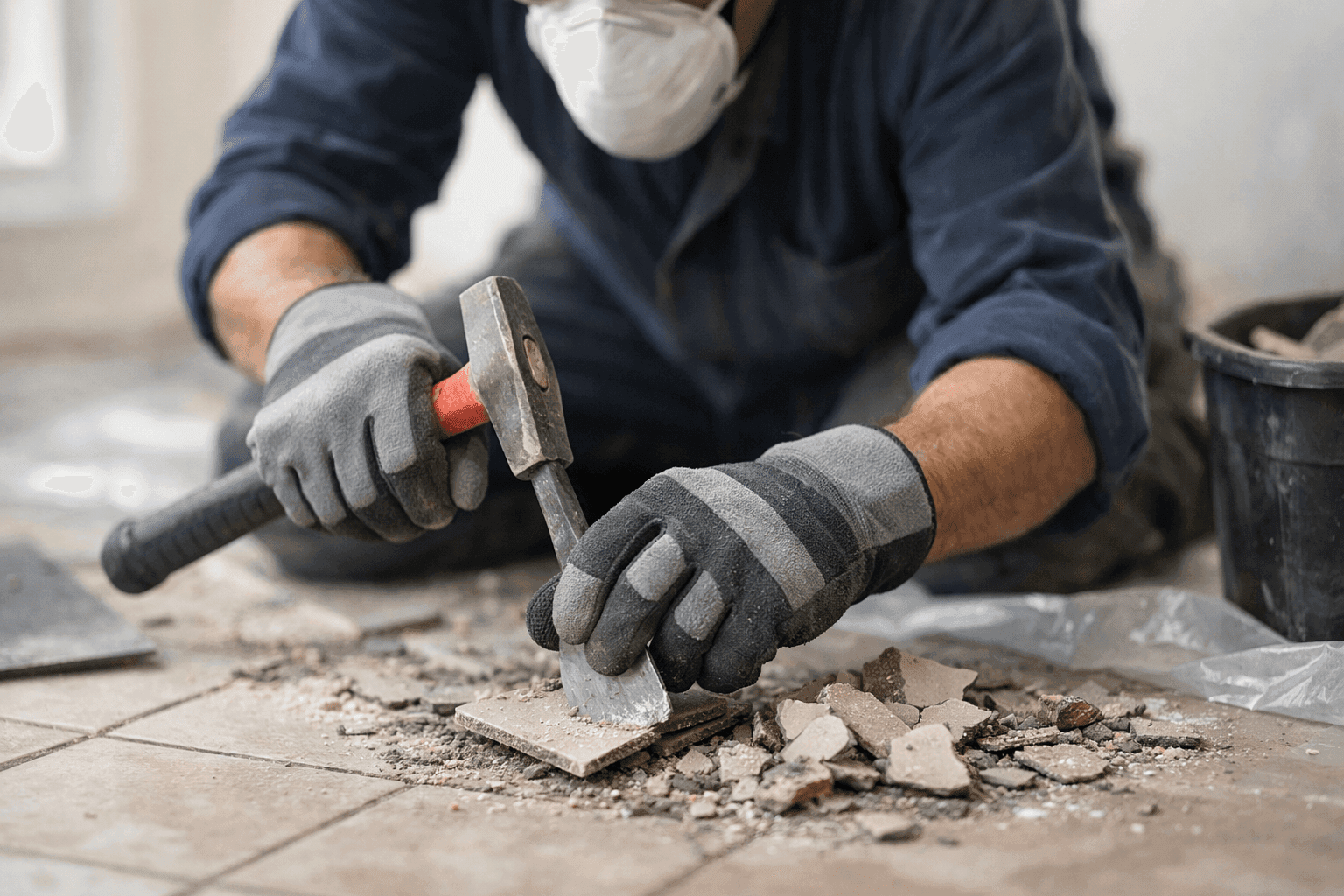
- Use a hammer and chisel to lift the first tile—then a floor scraper for the rest.
- Watch for sharp edges; tile shards can be razor-like.
- Remove old adhesive with a scraper or solvent.
Luxury Vinyl Plank (LVP) & Vinyl
- Start at a seam or loose corner.
- Pry up planks or tiles; for glue-down, use a scraper.
- Remove residual adhesive carefully to protect subfloors.
Hardwood
- Remove baseboards first.
- Work plank by plank using a pry bar.
- If floors are nailed or stapled, expect extra resistance.
- Inspect for hidden wires or pipes.
No single approach fits all, but patience and the right tools are your best allies.
Protecting Your Subfloor: Tips for Minimizing Damage
Your subfloor is the foundation for everything that follows. Gouges, holes, or moisture issues now will haunt you later. To avoid damage:
- Use flat-blade tools rather than pointed ones.
- Work slowly around corners and transitions.
- Clean as you go—dust and debris can hide trouble spots.
- If you spot rot or water damage, pause and inspect (see our Floor Repair service for details).
Dust Control: Keeping the Air Clean
Tiny particles from old flooring can hang in the air, settling everywhere. Think of dust like glitter—once it’s loose, it goes everywhere. To control it:
- Use plastic sheeting to contain the space.
- Run a shop vac with a HEPA filter as you work.
- Wet down stubborn dust (especially with tiles or adhesives) to prevent particles from becoming airborne.
For larger jobs, consider renting an air scrubber. The Environmental Protection Agency (EPA) notes that dust from renovations can pose risks—especially in older buildings.
DIY vs. Hiring a Professional
Some flooring removal is straightforward. Other times, it’s like opening a can of worms—especially with hidden water damage, old adhesives, or complex floor systems. When should you call a pro?
- If you suspect asbestos or lead-based materials (homes built pre-1980)
- When floors are glued, nailed, or stapled down in multiple layers
- For commercial spaces with safety or access requirements
- If you simply want a faster, less disruptive process
Our Flooring Consultation service can help you decide what’s right for your situation.
Common Mistakes to Avoid
- Skipping safety gear (even for “quick” jobs)
- Rushing removal and damaging the subfloor
- Forgetting to check for hidden mold or damage
- Underestimating time or disposal needs
When in doubt, slow down and reassess.
Tools & Equipment: What You Really Need
The basics cover most jobs:
- Pry bar
- Utility knife
- Floor scraper
- Hammer
- Shop vac
- Contractor bags
- Protective gear
For stubborn flooring, add a heat gun (to soften adhesives) or a power scraper. Renting tools can save money if you don’t plan to use them again.
Disposal: Don’t Leave a Mess Behind ♻️
Disposal rules vary by city and material. Most old carpet, tile, and wood can’t go in curbside bins. Here’s a quick guide:
- Bag carpet and padding in manageable bundles.
- Tile and wood planks often require a trip to a construction waste facility.
- Adhesives or hazardous materials (like old linoleum with asbestos) need special handling—check local codes.
Don’t forget to sweep and vacuum the area when you’re done.
Timeline: How Long Should Flooring Removal Take?
A single room of carpet or LVP might take a few hours. Tile and glued hardwood can stretch into a full day or more. Commercial spaces or entire homes? Plan for multiple days with lots of cleanup.
If you’re on a tight schedule, professional crews can often cut timelines in half—without sacrificing safety.
Signs You Need Floor Repair Before New Install
Sometimes, lifting up old flooring reveals deeper issues:
- Soft or spongy spots
- Visible mold or water stains
- Cracked or uneven subfloor
- Persistent musty odors
Don’t ignore these signs. Addressing them early means smoother, longer-lasting results. Our Floor Repair page offers more details.
When It’s an Emergency: Fast Action Required
Floods, burst pipes, or sudden mold outbreaks mean you can’t wait. Remove wet flooring as soon as possible to prevent health risks and structural damage. In these cases, call a professional right away to minimize risk.
Seasonal & Environmental Considerations
Removing flooring in summer? Expect more dust and the need for extra ventilation. In winter, be mindful of moisture and temperature swings—subfloors are more sensitive to expansion and contraction.
What to Expect When the Pros Arrive
Professional teams like JC Carpet & Flooring bring:
- Advanced dust containment systems
- The right tools for every flooring type
- Efficient, safe removal methods
- Proper disposal and cleanup
Expect a walk-through and clear communication about what’s next. If you’re looking for a reliable flooring company, our team is ready to help.
When to Call for Help: The Value of a Flooring Consultation
Not every removal should be DIY. If you’re unsure about your subfloor, have a complex space, or just want peace of mind, a Flooring Consultation can save time, money, and stress.
Final Thoughts: Clean Slate, New Possibilities
Removing old flooring is the first step toward a fresh, inviting space. Do it right, and your new floors will thank you for years to come. If you hit a snag or want professional results, our team at JC Carpet & Flooring is just a call away.
Call JC Carpet & Flooring now — or reach us anytime at 855-557-1115 .